
From the Inside
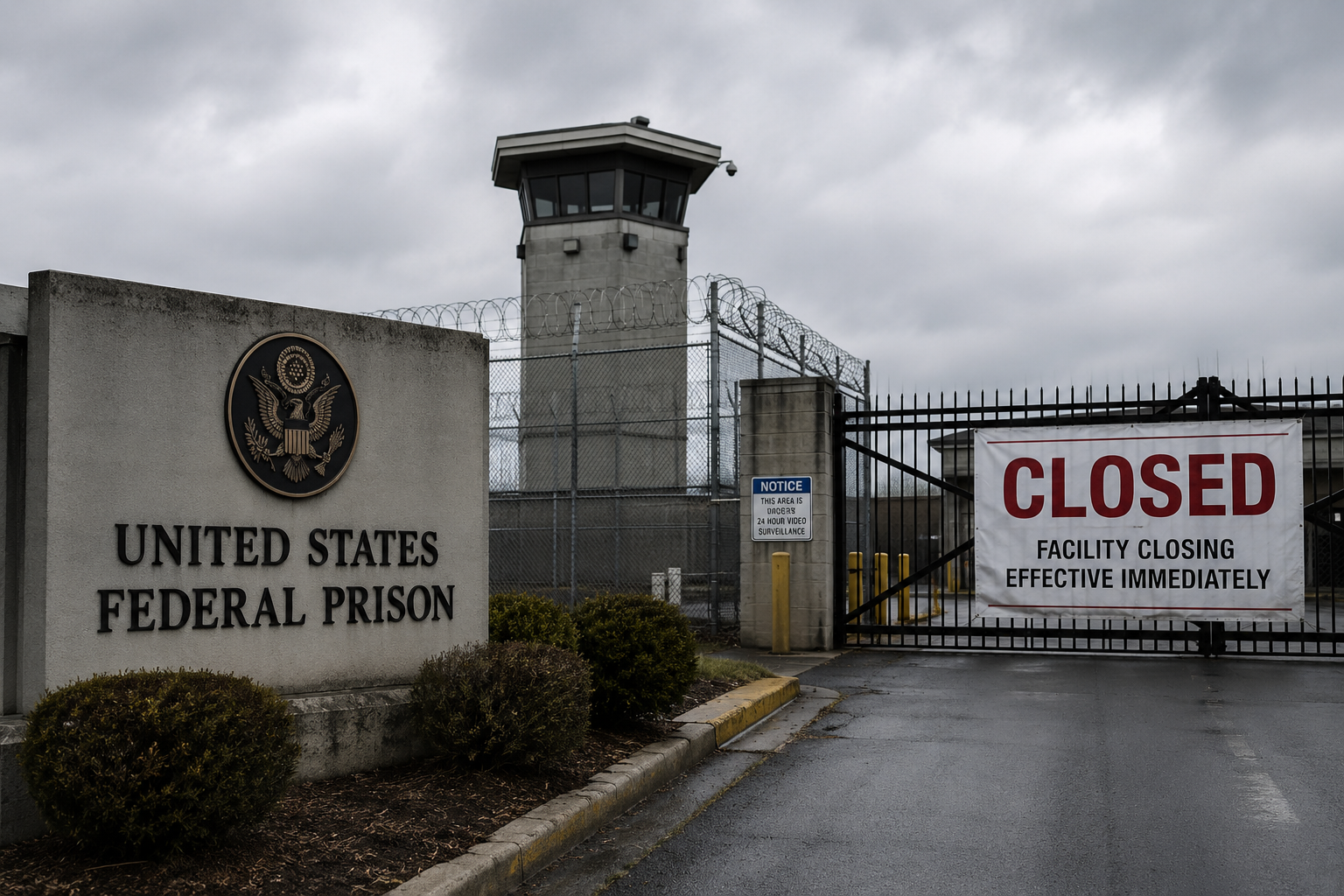
More Than Pawns: Federal Prison Closures, the 500-Mile Promise, and What They Did to Morgantown
On July 1, the Bureau of Prisons announced it was closing six more facilities and converting two prison camps, including my old one at Morgantown, into something else entirely.
I read the memo (two paragraphs of bureaucratic calm about a four billion dollar maintenance backlog) and I did not think about buildings. I thought about the people still inside, watching their whole world get reshuffled by a press release they had no say in.
The fate of Morgantown, in fast-forward
I had a front-row seat to how fast this can turn. When I got there, it was FCI Morgantown, a Federal Correctional Institution. While I was still on the compound, they redesignated it FPC Morgantown, a Federal Prison Camp (same minimum-security population, new letterhead). That December, the director at the time made a surprise visit to announce the camp was being suspended, along with Pensacola, Duluth, and a handful of satellite camps. Then a new administration came in, reversed part of it, and kept Morgantown open. Now, as of this month, the current director says Morgantown will convert from a minimum-security camp to a Federal Satellite Low.
FCI, then FPC, then closing, then not closing, then FSL. Four designations in about two years. Try building any kind of stability on ground that keeps moving under your feet.
Morgantown, by the paperwork
- 2023
- I arrive at FCI Morgantown, a stand-alone minimum-security institution.
- May 2024
- The facility is redesignated FPC Morgantown, a Federal Prison Camp.
- Dec. 5, 2024
- BOP announces it will suspend operations and move the people out. Staff to be reassigned to nearby Hazelton.
- 2025
- A new administration reverses several of the planned closures. Morgantown stays open.
- July 1, 2026
- BOP announces Morgantown will convert from a minimum-security camp to a Federal Satellite Low.
The anomaly nobody in the memo wants to name
Here is the part those tidy paragraphs skip over. The First Step Act, the same reform law the Bureau loves to cite, tells the BOP to place a person as close as practicable to home, and to the extent practicable within 500 driving miles of their release residence (that is 18 U.S.C. 3621(b), not my opinion). When they announced the Morgantown suspension back in December 2024, the BOP even promised, on the record, to make every effort to keep people within 500 miles of where they were going home to.
Then they put me on a plane to Oklahoma, and then a bus to Texas. The whole trip took a month.
The closure that was supposed to save resources did it by taking someone who was close to home and shipping them across the country. That is the exact opposite of what the reform law is for.
Texarkana is a solid 1,100 miles from my house. That is not within 500 miles by any math I know. I went from a camp basically in my backyard, first flown to the transit center in Oklahoma City (a stretch I have written about before, and would not wish on anyone), then bused the rest of the way. Roughly a month of my life disappeared into transit before I ever set foot in Texarkana. There was no hearing, no appeal, no one to ask. A memo went out, and the map of my life got redrawn.
And here is the part that still gets me. None of that month counted. You do not earn First Step Act time credits while you are in transit, because you are not in any program to earn them for. So the Bureau's own decision to uproot me and haul me across the country quietly cost me weeks of the very credits that send people home sooner. They moved me to help their budget, and I paid for it in time.
What actually closes when a prison closes
People on the outside hear prison closure and picture an empty building. What actually closes is a life someone built to survive. Inside, stability is the whole game. You get a job (I was in the electrician apprenticeship). You find a program. You learn the count, you figure out which officers are fair, you build a small routine that keeps your head above water. You get your people onto the visitation list and into a rhythm of Saturday drives, phone calls, and printed photos. Morgantown even had a wing where veterans trained service dogs for other veterans living with PTSD. That is not nothing. That is a person with a purpose.
Then a memo lands, and with a day or two of notice, people get packed into R and D (receiving and discharge) and scattered. The apprenticeship you were most of the way through does not follow you. The program you needed for your First Step Act credit may not even exist at the next place. Your mom, who could make the drive on a Saturday, suddenly cannot. And nobody will tell you where you are going or when. That uncertainty is its own kind of punishment, and for those who are already leaning hard on the structure of the place just to stay steady, it can do real damage.
These are not pawns to be slid around a board to balance a budget. They are people counting days, trying to come home better than they left.
When you move a person like furniture, you are not just changing their address. You are pulling out the few supports that reentry actually runs on: the family ties and the programming that the research, and the First Step Act itself, say lower the odds of somebody coming back. The system spends a lot of words on rehabilitation and then, with one memo, undoes the quiet work someone was doing to rehabilitate themselves.
If your loved one is on a closure list
Do not wait for the Bureau to decide their fate for them. Get their case manager on the phone and keep calling. Put the 500-mile rule in writing and ask, in writing, for placement near their release address. If they are close enough to the end of their sentence, ask about halfway house or home confinement instead of another transfer. None of this guarantees an outcome (the Bureau holds the pen), but a documented, squeaky wheel is a lot harder to ignore than a silent one. Save copies of everything. Dates and names matter later.
The takeaway
Morgantown will get another new sign on the gate, and the paperwork will call it progress. Maybe for the buildings it is. But I keep coming back to the people who are still there, watching their routines erased by a decision made in a room they will never see, by people who will never learn their names. They deserve to be treated as more than a line item in a budget nobody showed them. The least the rest of us can do is refuse to look away.
A note for families. A sudden transfer is disorienting and can be genuinely distressing for the person going through it. If your loved one is struggling with the stress of a move, encourage them to use the facility's psychology services and to lean on their support network. If you are carrying a lot yourself, it is okay to reach out for support too. Facebook has some excellent support groups for families of the incarcerated, where people who have walked through exactly this share advice and encouragement.